
A podcast where politics, history, and culture are examined from perspectives you may not have considered before. Call it a parallax view.
Parallax Views
w/ J.G. Michael
For 7+ years and over 600 episodes to date, J.G. Michael has been hosting and producing Parallax Views, a show with an eclectic variety of guests covering a broad range of topics including culture, current events, international relations, foreign policy, technology, cinema, literature, history, and more.
Previous notable guests include world-renowned anthropologist Wade Davis, philosopher Slavoj Zizek, Malcolm X's daughter Ilyasah Shabazz, forensic anthropologist and author of the BONES novel series Kathy Reichs, Pulitizer Prize-winning reporters like Michael Hiltzik and David Cay Johnston, Academy Award-nominated screenwriter and filmmaker John Sayles, Adult Swim's Casper Kelly (Adult Swim Yule Log, co-creator of Your Pretty Little Face is Going to Hell), world-class MMA fighter Jillian "Lionheart" DeCoursey, Harvard international relations scholar Stephen Walt, former President of the Federal Reserve Bank of Kansas City Thomas M. Hoenig, controversial filmmaker Uwe Boll, Pulitzer Prize-winning novelist Viet Thanh Nyugen, Ret. Col. Lawrence Wilkerson (Chief of Staff under Colin Powell), former FBI agent inside the CIA's Bin Laden Unit Mark Rossini, longtime union organizer and On the Line: A Story of Class, Solidarity, and Two Women's Epic Fight to Build a Union author Daisy Pitkin, UFC Hall of Famer Pat Miletich, legendary independent film producer/director Lloyd Kaufman of Troma, comic book artist Stephen Bissette (of Alan Moore's acclaimed Saga of the Swamp Thing), comedian Kate Willett, and bestselling authors like Nomi Prins, Greg Palast, Noam Chomsky, Neil Howe, James Bamford, Jacob Silverman, Thom Hartmann, Stephen Singular, Nina Burleigh, John Perkins, Christopher Leonard, Thomas Frank, and many others.. Whether J.G. is interviewing an entertainer, an academic, a former military or intelligence official, or an average Joe he hopes to expose listeners with ways of looking at the world they may not have considered before. Call it a Parallax View.
Additionally, Parallax Views / J.G. Michael is known for interviewing figures from across the political spectrum. From Unherd U.S. editor Sohrab Ahmari and former National Review correspondent Kevin D. Williamson to The Nation publisher Katrina Vanden Heuvel and The American Prospect executive editor David Dayen.
Twitter: https://twitter.com/ViewsParallax
Email: parallaxviewspod@protonmail.com
Please Support Me on Patreon If You Support My Work or Enjoy the Show!:
https://www.patreon.com/parallaxviews
Episodes
Jan 24, 2022
Jan 24, 2022
1hr 32 min
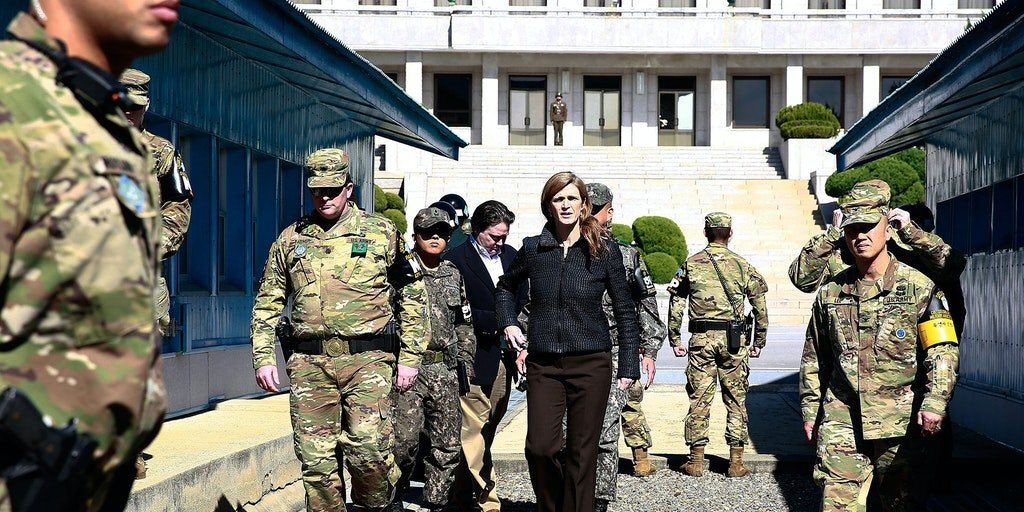
On this edition of Parallax Views, Christopher Mott, a Research Fellow at the Institute for Peace & Diplomacy and author The Formless Empire: A Short History of Diplomacy and Warfare in Central Asia, joins Parallax Views to discuss his recent CovertAction Magazine piece "Samantha Power and the Cosmopolitan Crusaders". Applying his knowledge as someone who has worked inside the U.S. State Department, Chris explains the foreign policy thought of the diplomat and government official Samantha Power, whose influential book A Problem from Hell: America and the Age of Genocide was foundational to R2P (Responsible to Protect) doctrine. R2P, Mott explains, holds that powerful nations (ie: the U.S. and NATO-aligned states) have a duty to stop human rights abuses around the world. Although a noble cause in theory, Mott argues that R2P in practice has not always worked perfectly in practice. In this regard Mott examines the Obama-era intervention into Libya on humanitarian grounds and how Libya has turned into a chaotic failed state that's led to the return of the slave trade to North Africa. In addition to all of this Mott and I also discuss:
- Fear of another Weimar moment haunting beltway foreign policy circles and the role that plays in driving interventionist policymaking
- The question of isolationism, the specter of WWII, and Stephen Wertheim's Tomorrow, the World: The Birth of U.S. Global Supremacy
- Foreign policy realism and its variations including offensive realism and defensive realism
- Sun Tzu, the risks of war, diplomacy vs. military force, and the question of grand strategy
- The role of ideological, systemic, and economic factors in U.S. foreign policy
- Democratic Peace Theory, American exceptionalism, and Kantian liberal cosmopolitanism
- Sanctions, the potential critique of their effectiveness in achieving state policy goals, and the Iran deal/JCPOA; sanctions as a form of economic warfare
- Jihadism, cosmopolitanism, and state collapse
- U.S.-China relations, human rights rhetoric, and whataboutisms
- American exceptionalism as having a right, left, and center form
- U.S. foreign policy, puritanical morality plays, and protagonist syndrome
- Tyler Cowen's Bloomberg op-ed arguing for using "Wokeism" (a very vague term removed from its original context on Black Twitter) to rebrand American exceptionalism
- And much, much more!

Jan 22, 2022
Jan 22, 2022
1hr 34 min
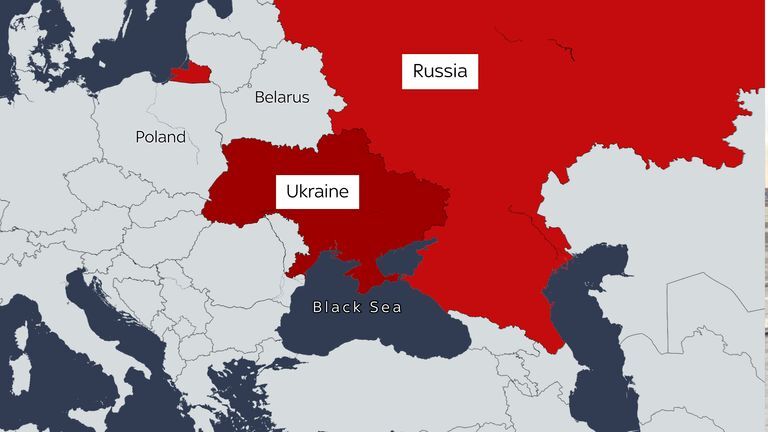
On this edition of Parallax Views, Katrina vanden Heuvel, Editorial Director and Publisher of The Nation, joins Parallax Views in the first half of the show to discuss the Ukraine-Russia crisis, the U.S., and NATO. Then, in the second half of the show Ret. Maj. Gen. Dennis Laich, author of Skin in the Game: Poor Kids and Patriots, joins the show to discuss the Military Times op-ed he co-wrote with Ret. Col. Lawrence Wilkerson on vaccination insubordination in the all-voluntary military force and its implications. And finally, libertarian economist David R. Henderson offers an argument for why the U.S. doesn't need to fight wars for oil and gives his perspective on the cause of high gas prices.
Toward a Global Realignment - Zbigniew Brzezinski - The National Interest - April 17, 2016
The Broken Chessboard: Brzezinski Gives Up on Empire - Mike Whitney - Counterpunch - Aug, 25, 2016
American Commitee for U.S.-Russia Accord
Do We Need to Go to War for Oil? - David R. Henderson - Independent Institute Policy Paper
Jan 19, 2022
Jan 19, 2022
1hr 13 min

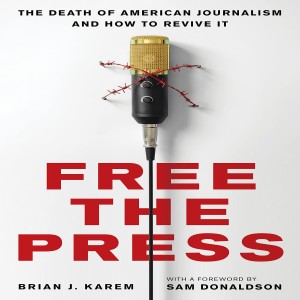
On this edition of Parallax Views, Brian Karem, renowned journalist. National Press Club Freedom of the Press Award recipient, host of the "Just Ask the Question" podcast, and White House correspondent for Playboy (who made waves for questioning the Trump administration quite pointedly at White House pressers), joins Parallax Views to discuss his new book Free the Press: The Death of American Journalism and How to Revive It and his career as a journalist from questioning George H.W. Bush about the failure of the War on Drugs to working on America's Most Wanted. We begin the conversation with Brian explaining how he got into reporting and being mentored legendary White House Correspondents as Sam Donaldson of ABC News and Helen Thomas (whose advice to Brian to "Just Ask the Question" has stuck with Brian over the years. From there we delve into the problems facing journalism today and its decline. Part of this decline, Brian argues is a lack of "diversity of ownership" in media. In other words, the corporate monopoly on news media today. Brian explains how government, especially since the Presidency of Ronald Reagan, has contributed to the decline of the press in the United States. This leads us to exploring a number of different issues related to the problems of the press today and their historical origins including the demise of the Fairness Doctrine, the impact of Fox News and its late Chairman and CEO Roger Ailes, lack of experience amongst many young journalists just out of university, the tethering of news media outlets to capitalism and profit demands, "Combat TV" and infotainment, Ronald Reagan and his allies' planting of fake journalists in the press in the 1980s, the fall of community news outlets with a local focus, access journalism, the early 20th century journalistic gadfly H.L. Mencken's adage about how members of the press are easy to fool and the reason why journalists get dupped at times, and more. Additionally, Brian and I talk about some of his experiences as a journalist such as his infamous confrontations with the Trump administration (ie: being called "that Playboy reporter" by Kayla McEnany; Brian's infamous run-in with Sebastian Gorka in which Gorka refered to Brian as a "punk" and "not a journalist), grilling George H.W. Bush over the failure of the War on Drugs (and a primer on the ways in which the Drug War has contributed to many social problems today, especially south of the U.S. border), his personal memories of Watergate burglar G. Gordon Liddy, working with grieving families and taking an ethical approach to speaking with them during his time with America's Most Wanted, and various other recollections form his storied career. The conversation even manages to get in some reference and/or remember such figures and events of years past to the noted antiwar "Maverick Marine" Gen. Smedley Butler and his seminal short book War is a Racket, the Iraq War and Judith Miller, the problems with the way some elements of the press covered the Steele Dossier (aka the "Trump pee-tape" story), the Capitol breach of January 6th, 2021 (Brian was in Washington, D.C. as it happened), covering an Federal Aviation Agency (FAA) scandal, the concept of the "Fourth Estate" and the need for it, and much, much more!
Jan 17, 2022
Jan 17, 2022
1hr 10 min

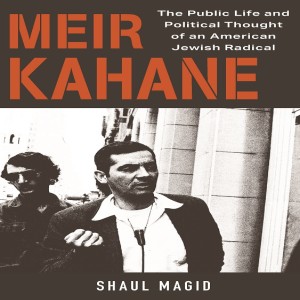
On this edition of Parallax Views, Shaul Magid, Distinguished Fellow in Jewish Studies at Dartmouth College, joins Parallax Views to discuss his book Meir Kahane: The Public Life and Political Thought of an American Jewish Radical. Kahane was one of the most divisive figures in Jewish American political/cultural life. The founder of the Jewish Defense League (JDL), Kahane was a man of the Right who sought to utilize the tactics of militancy often associated with the countercultural New Left of the 60s and 70s to achieve his aims. Kahane was a fierce proponent of Jewish pride and anti-antisemitism as well as a reactionary critic of the American Jewish liberal establishment in the 20th century. Today, Kahane name has returned in discussions of his followers in Israel (referred to by Magid Shaul as neo-Kahanists). Magid, in contrast to this trend, attempts to understand Kahane within the context of his impact on Jewish American life and argues that it has been overlooked in ways that actually strengthen rather than dampen Kahane's influence.
In this conversation Magid Shaul and I discuss a number of topics including:
- Kahane as both Zionist and counter-Zionist; the subtle differences between the neo-Kahanists in Israel today and Kahane; the relationship of Rabbi Abraham Isaac Kook to those aforementioned differences; Kahane as a profoundly American figure and a "fish out of water" character in Israel
- Kahane and black nationalism including a discussion of figures like Malcolm X and the Nation of Islam's Louis Farrakhan as well as Magid's thoughts on the nature of radicalism and revolutionary politics from both the right and left; Yippie leader Abbie Hoffman's comments about Rabbi Kahane; Kahane and black antisemitism
- Neoconservatism, Bari Weiss, Ben Shapiro, Dennis Praeger and other thinkers/movements and whether aspects of Kahane can be seen in them
- The founding of the Jewish Defense League and Kahane's eventual break from the JDL
- The role of violence in Kahane's thought and why he could not leave violence behind in his thought
- Kahane as a critic of hypocrisy while being a profoundly hypocritical man himself
- Kahane's distrust and criticism of American liberalism; fear of assimilation and erasure of Jewish identity
And much, much more!
Jan 15, 2022
Jan 15, 2022
1hr 21 min

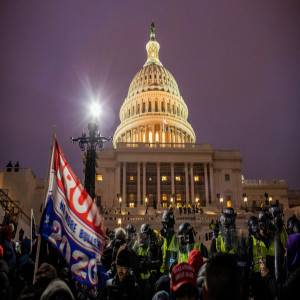
On this edition of Parallax Views, Dan Feidt of the media collective Unicorn Riot joined Parallax Views to discuss his lengthy, complex investigative piece "January 6 Documents Reveal Plans to Overturn 2020 Election as Military Questions Deepen: Congress investigates military role in Jan. 6; Generals warn of rogue military personnel in future coup attempts". The question at the core of Dan's article is the military and National Guard response to the Capitol breach (which has also been referred to as an insurrection). In particular, Dan hones in on the whistleblower testimony of Col. Earl Matthews, a former D.C. National Guard official, who has accused Gen. Charles Flynn (brother of the infamous Michael Flynn) and Walter Piatt of deceiving Congress. In a memo, Col. Matthews has gone so far as to call Piatt and Flynn "absolute and unmitigated liars". key issue is that the National Guard's timeline of events in relation to January 6th conflicts with the Pentagon's timeline of the same events.
This takes us on a journey into a number of issues including: White House Chief of Staff Mark Meadows powerpoint to Trump about declaring the elections illegitimate and his invocation of national emergency measures; the history of national emergency measures, COG (Continuity of Government); Operation Garden Plot and Rex 84; fears expressed by retired military brass that a military breakdown and Civil War could occur if another incident like the Capitol breach happens; the history of coup d'états and how they happen; the 2016 coup attempt in Turkey; Michael Flynn and his calls for creating an army of "digital soldiers"; Iran-Contra figure, hardline Cold Warrior, and longtime friend of the Flynn family Maj. Gen. John Singlaub and "America's Covert Empire"; Jimmy Carter's firing of Singlaub and the alleged "October Surprise" plot; journalist Matt Farwell's reporting on Ret. Lt. Gen Michael Flynn and Flynn's "Long Game"; police militarization and population control in the era of Ronald Reagan's Presidency; the Council for National Policy, the World Anti-Communist League, the John Birch Society, arch-conservative Phyllis Schlafly, and the Eagles Forum (as well as the successor organization Phyllis Schlafly Eagles); US Northern Command (USNORTHCOM) Civil Disturbance Operations Plan CONPLAN 3502; federalized troops; the George Floyd uprising and National Guard mobilization; the slowness of the response on January 6th; Michael Flynn's attorney Sidney Powell; Roger Stone, the Brooks Bros. riot in Florida, and the 2000 election; election integrity and Ohio in relation to the 2004 election; Christian Nationalism, Michael Flynn, and the "Jericho March"; Cold War networks; "low intensity operations"; and much, much more!
Jan 14, 2022
Jan 14, 2022
1hr 14 min

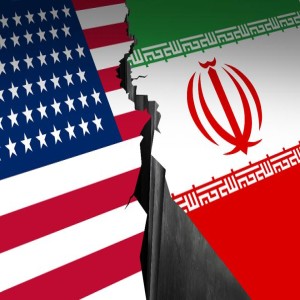
On this edition of Parallax Views, Shireen Tahmaaseb Hunter, an Honorary Fellow at Prince Alwaleed Bin Talal Center for Muslim-Christian Understanding (ACMCU) at the Georgetown University School of Foreign Service and author of Iran Divided: Historic Roots of Iranian Debates in Identity, Culture and Governance in the 21st Century, joins Parallax Views to discuss her Responsible Statecraft article "Time to look inward: Not all of Iran’s problems are caused by the West". This differs from previous interviews about Iran in that the focus is not on the U.S. role in the problems of getting back into the JCPOA, but the problems Hunter sees with Iran's hardline elements from a realist foreign policy perspective. Hunter argues that Iran should be taking a realist approach to its foreign policy that puts the Iranian people before its relationships with other countries. Additionally, we have a discussion about what realism is and the misunderstandings about it. In this conversation we discuss Iran and the anti-imperialist struggle, Iran and Assad's Syria, Henry Kissinger and his association with realism (and why Hunter questions the categorization of Kissinger as a realist), the "Axis of Resistance" (also: the "Axis of Rejection"), Iran and Israel/Palestine, power relationships as shaping international relationships whether we like it or not, lack of education and understanding about international affairs, Iran and Saudi Arabia, the unresolved question of Palestine and its use by various political forces, hardliners vs. moderates in Iran, hardliners in the U.S. like Mike Pompeo and John Bolton (and the almost symbiotic relationship between U.S. hardliners and Iran hardliners), the devastating impacts of sanctions on Iran, Clinton and Iran, similarities between what we are seeing now with the tensions between the U.S. and Iran and the tensions of the Cold War, the American tendency to ignore history, the weight of history and the implausibility of totally clean "restarts", the accomplishment of the Iran Deal under Obama, negotiations between the U.S. and Iran going forward, structural impediments to Iran negotiations from the U.S. end of things (including lobbying efforts against U.S.-Iran reconciliation), Russia and U.S.-Iran reconciliation, reconciliation will be based on compromise, the principles of international relations, Teddy Roosevelt's maxim "speak softly and carry a big steak", Iran and its proxies, the Yemen issue in regard to talks between Saudi Arabia and Iran, why Obama was able to get the Iran deal through and his understanding of the dynamics of the third world, the need to rescue the realist school, the damage caused by extreme idealists, military intervention and the way it can impeded democracy, the greatest security theats today are climate change and pandemics, and much, much more!
Jan 12, 2022
Jan 12, 2022
1hr 23 min

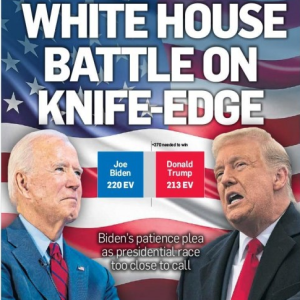
On this edition of Parallax Views, Thomas Ferguson, Emeritus Professor of Political Science at University of Massachusetts Boston and author of The Golden Rule: The Investment Theory of Party Competition, returns to Parallax Views to discuss the latest working paper he's co-authored (with Paul Jorgensen and Jie Chen) for the Institute for New Economic Thinking entitled "The Knife Edge Election of 2020: American Politics Between Washington, Kabul, and Weimar". Using statistical methodology, Ferguson and his co-authors delve into the potential reasons for Biden's win, Trump's loss, and the reason the race was so tight. Ferugson discusses how this analysis is important in lieu of the coming midterms and the 2024 election, which could prove perilous for the Democratic Party. In this conversation we delve into the role of pandemic, Black Lives Matter, the Wildcat Strikes, Big Agriculture/Big Farming, and more as these matters related to the election. We also discuss the Virginia governor election that saw the victory of Republican candidate Glenn Youngkin, elites leaving Trump but not the GOP (and banking on "Trump-lite candidates), the Biden administration's handling of the pandemic, Biden and OSHA, the role of money and sectoral factors (different industries and their interests) in elections, the economy and education as a factor in the Virginia governor race, crises facing schools during the pandemics, agriculture as Trump's "ace in the hole" (and an "ace in the hole" for Republicans in previous elections), COVID testing crisis, the lack of unions in farming, Black Lives Matter as working as a slight plus for Democrats in the 2020 Election, addressing the question of whether or not the pandemic hurt Trump and helped Biden, Trump's trade wars with Europe and China, farm politics and the lack of political science examination of it, Trump's 74 million votes and the pouring of money into rural areas, the shadow of economic globalization, 2024 as a potential Biden moment for Biden, corporate Democrats, the Republican sweep of Congress in the 1994 mid-term elections, Nancy Pelosi vs. Alexandria Ocasio Cortez on Congressional stock trading, predictive models, the Dodd-Frank reforms and the INET study on that, the AFL-CIO and FDR's New Deal, and more!
"How Big Business Got Woke and Dumped Trump" by Molly Ball - TIME - November 1, 2021
Mike Elk's Payday Report - Covering Labor in News Deserts
Golden Rule: The Investment Theory of Politics (Full Documentary)

Jan 10, 2022
Jan 10, 2022
47 min
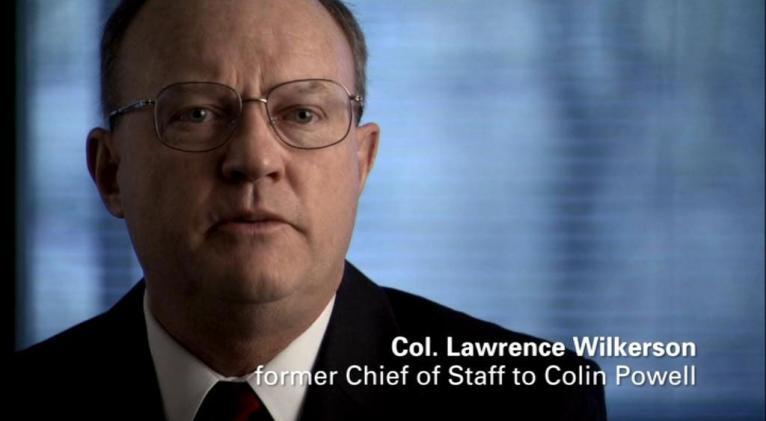
On this edition of Parallax Views, Ret. Col. Lawrence Wilkerson, former Chief of Staff to Colin Powell, returns to Parallax Views to discuss the state of U.S. foreign policy, international relations, and the military-industrial congressional complex. The conversation begins with a discussion of AIPAC's recently announced foray into direct spending on U.S. election, the U.S.-Israel relationship, and the potential of a cataclysm in the relationship. We also discuss the far-right, Trumpism, and antisemitism in regard to all of this the changing nature of the U.S.-Israel relationship going forward into the next few decades. Col. Wilkerson expresses his belief that the relationship between U.S. and Israel will not atrophy over time, but rather come to a juncture that will lead to a catastrophic rupture.
From there we pivot to discussing the newly passed Pentagon/defense budget that over $770 billion dollars in total. In this regard we talk about the deepening chasm between the public's increasingly weary feelings towards war and military adventurism and Congress' support of thing like the recent $650 million arms deal to Saudi Arabia. Col. Lawrence Wilkerson also elaborates on his belief that the National Security State is "eating up" American Democracy. We go through some history from the Cold War to post-9/11 War on Terror. The National Security State, Wilkerson says, is always seeking to find a new threat to justify its continued existence and growth.
Ret. Col. Wilkerson and I also get into the current Ukraine crisis, U.S.-Russia relations, the situation with Taiwan, U.S.-China relations, the war games simulations over Taiwan and their significance (Wilkerson has been involved in some of these simulations), China's Belt and Road Initiative, Vladimir Putin, intelligence agencies and the problems CIA vs. NKVD/GRU intelligence, the threat of nuclear weapons being used if a war is started conventionally, the New Cold War, the threat of climate change and the environmental impacts of the Department of Defense, hubris within elements of the foreign policy establishment, and finally Wilkerson's thoughts on the recently passed Colin Powell and the conflcits between figures like Powell and Dick Cheney in the years of the Bush administration's stay in the White House.
"From unknown successes to personal disillusionment: What the public doesn’t know about Colin Powell" by Hilary McQuilkin and Meghna Chakrabarti - On Point Radio on WBUR - October 22, 2021
NOTE: This conversation was recorded October 7th, 2021
Jan 8, 2022
Jan 8, 2022
47 min

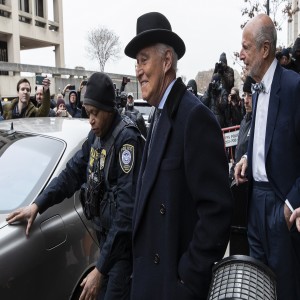
On this edition of Parallax Views, Russ Baker of WhoWhatWhy (and author of the cult classic book Family of Secrets: The Bush Dynasty, America's Invisible Government, and the Hidden History of the Last Fifty Years) joined me to discuss a fascinating story he got from the late Len Colodny (co-author, with Robert Gettlin, of the controversial Watergate book Silent Coup: The Removal of a President) about a conversation Colodny had with Roger Stone in which the long-time Republican "dirty trickster" claimed back in 2016 of plans for a disruption that could remind one of what happened a year ago with the Capitol breach on January 6th. Additionally, Russ and I also discuss the figure of Taylor Budowich, a Trum spokesman, and a for-profit California entity he just so happened to create on January 6th, 2021. Turns out Budowich has filed a suit to block the Jan 6th getting more testimony and financial documents from him. Budowich has also gone to court the banking giant JP Morgan Chase over his records. All that and more on this edition of Parallax Views!
"Did Trump Spokesman Hide Assets on January 6?" by Russ Baker - WhoWhatWhy - January 6, 2021
Jan 7, 2022
Jan 7, 2022
2hr 13 min

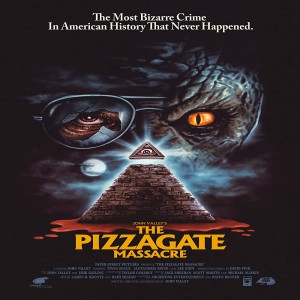
On this edition of Parallax Views, during the 2016 Presidential election a conspiracy theory known as Pizzagate went viral online. Said theory alleged that influential members of the Democratic Party were involved in child sex rings that engaged in human trafficking of minors through a Washington D.C. pizzeria known as Comet Ping Pong. Believer in the theory grew in numbers as discussion of Pizzagate proliferated through 4chan, websites like Infowars and Your News Wire, r/DonaldTrump Reddit and its subreddit r/Pizzagate, as well as other digital spaces. Comet Ping Pong owner reported harassment of himself and his employees at the hands of the theory's believers. Then, on December 4th, 2016, Edgar Madison Welch, armed with an AR-15 style rife and spurred to action after reading about Pizzagate, opened fire on Comet Ping Pong. Welch was subsequently apprehended and arrested before anyone could be injured. Rather than blowing the lid off an alleged shadowy cabal's nefarious activities at a D.C. pizza shop, Welch instead found himself serving a 4-year prison sentence.
That, however, was not the end of the Pizzagate saga. Despite a lack of evidence for its central claims, belief in Pizzagate persisted and mutated into new forms. In 2020, for example, Pizzagate was reborn in a new iteration on the social media website TikTok. Additionally, phenomena like QAnon or the "Stop the Steal" movement, both of which figured into the now infamous January, 6th, 2021 breach of the Capitol, very arguably evolved from or at least are adjacent to the Pizzagate theory's proponents.
Texas-based filmmaker John M. Valley recently took the phenomena of this particular conspiracy theory and its far-reaching social ramifications as a springboard for darkly satirizing fake news and right-wing political paranoia in the independent film The Pizzagate Massacre. A road movie with elements of horror and western within its trappings, The Pizzagate Massacre follows recently fired rookie journalist Karen (Alexandria Payne) and militia man Duncan (Tinus Sinoux) as they travel to a Texas-based pizzeria that sensationalistic local media personality Terri Lee (Austin-based comedian Lee Eddy) claims is the site of a sinister child trafficking conspiracy run by an shadowy elite cabal that includes shapeshifting reptilians (a la David Icke conspiracy theories) in its ranks. Meanwhile, Duncan's rival within the local militia, Philip (John M. Valley), spurred on by Lee's Pizzagate theories, has plans of his own that could have violent consequences.
John M. Valley joins me on this edition of Parallax Views to discuss the movie, its themes, the process of making it, and the threats he received from Pizzagate believers before the film was even released. Among the topics discussed:
- Capitalism, media, Alex Jones, and the supercharging of tribalism in the service of monetization
- The specters of Waco, Ruby Ridge, David Koresh, and the Branch Davidians in the movie
- John Carpenter, Sam Peckinpah, and The Pizzagate Massacre as a neo-western
- Roger Corman and the potential of genre and exploitation movies to allow independent filmmakers a way of exploring important social, cultural, and political issues
- Film as a collaborative effort; how a cast and crew can bring their own vision to a movie alongside the director's vision
- Making a film that feels high budget on less than a million dollars ("micro-budget")
- The "lizard people" trope and conspiracy theories as metaphor; discernment and the weaponization of conspiracy theories today and in the past; conspiracy theories as potentially conspiracies in and of themselves sometimes
- Attempting to empathize with people who fall down rabbit holes like QAnon and Pizzagate while also critiquing right-wing conspiracy culture
- How the narrative of The Pizzagate Massacre unfolds from the perspective of multiple characters with their own biases and its purpose within the film's thematic tableau
- The 2020 horror/thriller The Hunt, which was cancelled by Trump supporters for its storyline involving liberal elites hunting "deplorables"
- Belief, empathy, and uncertainty
- The death threats John received over the movie before it was even released
- The portrayal of militias and their culture within the movie
- How cinema can offer a different perspective than news media on issues related to politics, culture, and society
- And much, much more
More About Parallax Views:
Over 1 million unique downloads!
Over 950+ episodes!
Ranked in the Top 100 Podcasts Covering "Armed Conflicts" by MillionPodcasts!
As featured in The Daily Dot:
Featured in the academic study of podcasts and podcast culture, The Podcaster's Dilemma:
Decolonizing Podcasters in the Era of Surveillance Capitalism
by Nicholas Brahmin II & Nolan Higdon