
A podcast where politics, history, and culture are examined from perspectives you may not have considered before. Call it a parallax view.
Parallax Views
w/ J.G. Michael
For 7+ years and over 600 episodes to date, J.G. Michael has been hosting and producing Parallax Views, a show with an eclectic variety of guests covering a broad range of topics including culture, current events, international relations, foreign policy, technology, cinema, literature, history, and more.
Previous notable guests include world-renowned anthropologist Wade Davis, philosopher Slavoj Zizek, Malcolm X's daughter Ilyasah Shabazz, forensic anthropologist and author of the BONES novel series Kathy Reichs, Pulitizer Prize-winning reporters like Michael Hiltzik and David Cay Johnston, Academy Award-nominated screenwriter and filmmaker John Sayles, Adult Swim's Casper Kelly (Adult Swim Yule Log, co-creator of Your Pretty Little Face is Going to Hell), world-class MMA fighter Jillian "Lionheart" DeCoursey, Harvard international relations scholar Stephen Walt, former President of the Federal Reserve Bank of Kansas City Thomas M. Hoenig, controversial filmmaker Uwe Boll, Pulitzer Prize-winning novelist Viet Thanh Nyugen, Ret. Col. Lawrence Wilkerson (Chief of Staff under Colin Powell), former FBI agent inside the CIA's Bin Laden Unit Mark Rossini, longtime union organizer and On the Line: A Story of Class, Solidarity, and Two Women's Epic Fight to Build a Union author Daisy Pitkin, UFC Hall of Famer Pat Miletich, legendary independent film producer/director Lloyd Kaufman of Troma, comic book artist Stephen Bissette (of Alan Moore's acclaimed Saga of the Swamp Thing), comedian Kate Willett, and bestselling authors like Nomi Prins, Greg Palast, Noam Chomsky, Neil Howe, James Bamford, Jacob Silverman, Thom Hartmann, Stephen Singular, Nina Burleigh, John Perkins, Christopher Leonard, Thomas Frank, and many others.. Whether J.G. is interviewing an entertainer, an academic, a former military or intelligence official, or an average Joe he hopes to expose listeners with ways of looking at the world they may not have considered before. Call it a Parallax View.
Additionally, Parallax Views / J.G. Michael is known for interviewing figures from across the political spectrum. From Unherd U.S. editor Sohrab Ahmari and former National Review correspondent Kevin D. Williamson to The Nation publisher Katrina Vanden Heuvel and The American Prospect executive editor David Dayen.
Twitter: https://twitter.com/ViewsParallax
Email: parallaxviewspod@protonmail.com
Please Support Me on Patreon If You Support My Work or Enjoy the Show!:
https://www.patreon.com/parallaxviews
Episodes
Sep 16, 2020
Sep 16, 2020
1 hr 1 min
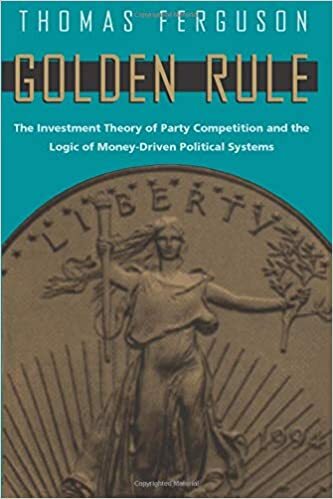
On this edition of Parallax Views, much has been made about the role of money in the outcomes of political elections, at least within . In academic disciplines, however, this has often been seen as heresy. In fact, some view it as nothing more than conspiracy theory. And, truth be told, it would likely be overly simplistic to argue that a small handful of shadowy individuals select the two Presidential candidates every four years in U.S. elections. However, political scientist Dr. Thomas Ferguson, Professor Emeritus at the University of Massachusetts, Boston, dispenses with such oversimplifications while also making the case, through his extensive empirical research, that, yes, money in politics DOES, as a matter of fact, influence electoral outcomes.
After receiving his Ph.D at Princeton University, Dr. Ferguson went on to teach, for a time, at MIT. During his academic travels he delved into the history undergirding FDR and the New Deal. In doing so he developed an alternative model to understanding elections that challenged the median voter theorem. This came to be known as the investment theory of part competition, which Dr. Ferguson elaborated upon in his landmark book Golden Rule: The Investment Theory of Party Competition and the Logic of Money-Driven Political Systems, he joins us on this edition of the program to discuss this theory, how he came to developing it, and his thoughts on the 2020 Presidential election pitting Republican incumbent Donald Trump against Democratic nominee Joe Biden.
In the course of our conversation we also discuss:
- Rahm Emmanuel's declaration that 2020 would be the year of the Biden Republican
- Thoughts on the Alexandria Ocasio-Cortez wing of the Democratic Party and the development of small donor power in elections
- Why conspiracy theories have become so popular
- The stunning defeat of Joe Kennedy by Ed Markey in the Massachusetts Senate race
- Thoughts on the panic-laden Deutsche Bank report by Jim Reid warning investors of an "Age of Disorder"
- And much, much more!
This Episode Brought to You By:
The War State:
The Cold War Origins of the Military-Industrial Complex and the Power Elite, 1945-1963
by
Michael Swanson
of
The Wall Street Window
Sep 14, 2020
Sep 14, 2020
51 min

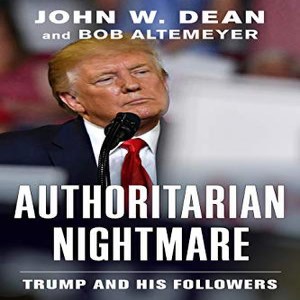
On this edition of Parallax Views, authoritarianism has been a hot topic since the election of Donald Trump to the Presidency of the United States in 2016. But there's actually a rich history of social science studies interrogating the dilemma of the authoritarian personality. In fact, according to our guest on this edition of the program, there's over half a century worth of research on the authoritarian personality type. John W. Dean, a former White House Counsel under President Richard Nixon who testified to Congress in the Watergate hearings, joins us to discuss his new book, co-authored with Bob Altemeyer, entitled Authoritarian Nightmare: Trump and His Followers.
In this fascinating conversation, John and begin by referencing the work of Hunter S. Thompson and his idea of "Fear and Loathing" in politics being apropos of the current zeitgeist. John then details the different types of authoritarian personality types: social dominators, authoritarian followers, and "double highs". We discuss each of these type and how, despite key differences between them, they have coalesced in the era of the Trump Presidency. In this regard, we take some time to delve into the connection between Right-Wing Authoritarianism and the evangelical Christian Right. John makes the case that these types of authoritarian personality types are either impossible to persuade or, at the very least, very hard to persuade. In other words, converting authoritarian personalities may prove a Sisyphean task.
We also discuss conservatism, the GOP, and right-wing authoritarianism. John relates how Authoritarian Nightmare is a sequel of sort to his previous book Conservatives Without Conscience. The prequel to Authoritarian Nightmare, John says, was actually a planned collaboration betwen John Dean and 1964 GOP Presidential nominee Sen. Barry Goldwater. I ask John a bit about his time as a "Goldwater conservative" and John gives some anecdotes about Barry Goldwater in this regard. According to John, Goldwater was disillusioned with the direction the Republican Party was going in by the time of the Reagan Presidency in the 1980s. John argues that Goldwater was unfairly smeared as a racist, nativist conservative, but in reality was more or less a libertarian. Jumping off from this point, John says that he can't really fault the GOP entirely for it's authoritarian voter base and that the base informs the make-up of the Party rather than the other way around.
Before wrapping up John and I discuss whether Trump and his followers can really be considered conservative and if the GOP today is representative of a movement related to the historical tradition of political conservatism. We also chat about the similarities and differences between Richard Nixon and Donald Trump in this regard. All that and much more on this edition of Parallax Views.
This Episode Brought to You By:
The War State:
The Cold War Origins of the Military-Industrial Complex and the Power Elite, 1945-1963
by
Michael Swanson
of
The Wall Street Window
Sep 14, 2020
Sep 14, 2020
26 min

On this edition of Parallax Views, I recently appeared on the Along the Line podcast, an affiliate of our friends at Project Censored to discuss the importance of alternative media. Dr. Nolan Higdon, Nicolas Baham III, and Janice Domingo were gracious enough to have me on the program and I think we had a good chat about the need for alt media during this election season.
This Episode Brought to You By:
The War State:
The Cold War Origins of the Military-Industrial Complex and the Power Elite, 1945-1963
by
Michael Swanson
of
The Wall Street Window
Sep 12, 2020
Sep 12, 2020
1 hr 14 min

On this edition of Parallax Views, Georgia is faced with an unusual electoral situation following the resignation of Senator Johnny Isakson's 2019 resignation. Since that time Kelly Loeffler has acted as Isakson's replacement until a November 3rd, 2020 special election, or "jungle primary", which will decide who gets Isakson's Senate seat. One of those candidates is Hegelian philosophy scholar and prolific author Prof. Richard Dien Winfield. Winfield previously made a foray into politics in 2018 when he made an attempt to run as a U.S. Representative for Georgia's 10th congressional district. During that time Winfield became known for being the one candidate pushing for a Federal Jobs Guarantee. He joins us on this edition of the program to discuss his run for Senate as well as to outline his ideas about freedom, the social bill of rights, and why we need a federal jobs guarantee as outlined in his tremendous new book Democracy Unchained: How We Should Fulfill Our Social Rights and Save Self-Government.
Among the topics discussed:
- Environmental crises facing America including the current wildfires; personal health and environmental health as a right that must be ensured not only for ourselves but also future generations; dealing with climate change and the Green New Deal
- The question of Reparations for descendants of slavery and victims of Jim Crow; Winfield's unique answer to the question of Reparations may surprise you
- A lengthy discussion on Winfield's federal jobs guarantee platform; why does he believe it is so necessary?
- Running for Senate in the middle of the coronavirus pandemic
- The issue of public education; the right to an education
- The influence of philosophy and the idea of W.F. Hegel on Winfield's thought
- Wealth inequality and income inequality; a fair minimum wage; taxation and fair taxation
- Winfield's criticisms of Universal Basic Income (UBI)
This Episode Brought to You By:
The War State:
The Cold War Origins of the Military-Industrial Complex and the Power Elite, 1945-1963
by
Michael Swanson
of
The Wall Street Window
Sep 11, 2020
Sep 11, 2020
1 hr 13 min

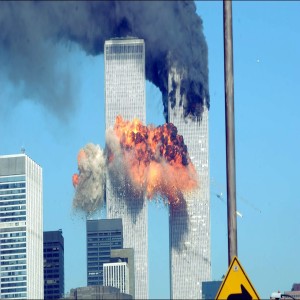
On this edition of Parallax Views, was 9/11 preventable? Our guest on this September 11th anniversary edition of Parallax Views, Mark Rossini, who worked as the FBI's point man in the CIA's Bin Laden Unit (aka ALEC Station), makes the case it was in his piece "In Re: 9/11". As an FBI agent working in ALEC Station alongside fellow FBI agent Doug Miller, Mark became privy to the CIA's monitoring of two 9/11 hijackers, Flight 77's Nawaf al-Hazmi and Khalid al-Mihdhar, and a "Terror Summit" in Kuala Lumpur, Malyasia from January 5th-8th, 2000. Through their monitoring of these activities, the CIA discovered that the two future 9/11 terrorist had VISAs to the U.S. When Doug Miller wrote a report on the summit, however, the CIA told both he and Rossini not to send it to the FBI.
For 19 years Mark Rossini has been troubled by the question of WHY the CIA did not share this vital bit of information with the CIA. His conclusions, which were independently corroborated by National Coordinator for Security, Infrastructure Protection, and Counter-terrorism Richard Clarke, is that elements of the CIA made a catastrophic decision after the Kuala Lumpur Summit that they kept under wraps to preserve their own careers and reputations. This decision, which Rossini makes a strong circumstantial case for having occurred, involved an illegal recruitment operation and Saudi Arabia's intelligence services aka the Mabahith. Rossini believes that, if this circumstantial case is true, then 9/11 may well have been preventable.
And yes, this is the same Mark Rossini featured heavily in Lawrence Wright's book The Looming Tower and as a character in the TV series of the same name.
PLEASE READ MARK ROSSINI'S ANALYSIS OF 9/11

https://undicisettembre.blogspot.com/p/mark-rossini-inre911.html
In this conversation we discuss:
- The FBI's John O'Neil, known as Bin Laden's arch-nemesis (who, after leaving the FBI shortly before 9/11 perished in the towers on that fateful day) and the conflicts between O'Neil and the CIA, specifically former BIn Laden Unit head honcho Michael Scheuer
- The concept of "The Wall", which many believe led to botched communications before 9/11 between the FBI and CIA, and why Rossini believes "The Wall" isn't a sufficient explanation for the CIA's withholding information regarding the Malaysia terror summit from the FBI
- The relationship between the CIA and Saudi Arabia's Mahabith; the special relationship between Saudi Arabia and the U.S.
- FBI agent Steve Bongardt and his angry email to Dina Corsi in July of 2001 regarding the CIA, FBI, and al-Hazmi and al-Mihdhar; Bongardt wrote that, “Someday somebody will die—and, Wall or not, the public will not understand why we were not more effective.”
- CIA Director George Tenet's comments pertaining to 9/11
- And much, much more.
This Episode Brought to You By:
The War State:
The Cold War Origins of the Military-Industrial Complex and the Power Elite, 1945-1963
by
Michael Swanson
of
The Wall Street Window
Sep 9, 2020
Sep 9, 2020
45 sec

On this edition of Parallax Views, Donald Trump recently opined, in a now infamous with Laura Ingraham for Fox News, that Democratic Party Presidential candidate Joe Biden was being controlled by "people in the dark shadows". This, of course, should come as no surprise given that conspiratorial mutterings about globalist elites hellbent on destroying the United States of America has become a hallmark of Trump's base. In fact, one can find ideations of a paranoid variety amongst rather visible elements of the American right-wing going back to the day of Senator Joe McCarthy and the Red Scare as well as in right-wing media outlets and organizations like WorldNetDaily and the John Birch Society. Even prior to Trump, figures like Alex Jones and Jerome Corsi promoted what historian Richard Hofstadter referred to as "The Paranoid Style in American Politics".
In the 1990's, the militia and "Patriot" movement were driven by fears that the Clinton administration, specifically after Ruby Ridge and Waco, would usher in draconian martial law with the help of agencies like FEMA or, in some theories, the United Nations. Interestingly, then First Lady Hillary Clinton was roundly mocked at this time for offering a paranoid alternative to the right's vision of dystopia being ushered in by her husband. There existed, she said, a "vast right wing conspiracy" to undermine Bill Clinton's Presidency. This, of course, was roundly mocked as the delusional rantings of a "moonbat" or "wingnut". But was Clinton's accusation completely unfounded? Has the American right-wing been projecting when it lobs allegations of unpatriotic and sinister plots against Democrats and the Left?
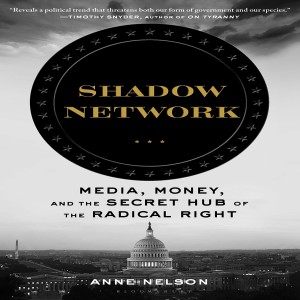
Veteran journalist Anne Nelson makes the case in her new book, Shadow Network: Media, Money, and the Secret Hub of the Radical Right, that the American Right, specifically through a sorely underdiscussed and shadowy organization, has been engaging in a certain kind of subterfuge that isn't far off from being a "vast right wing conspiracy". In this explosive new book Nelson, whose journalistic exploits includes covering the U.S. support of right-wing death squads in El Salvador during the Reagan Presidency, details the under-the-radar machinations of the Council for National Policy. Modeled as a conservative equivalent to the Council on Foreign Relations, a favorite target of right-wing paranoia, the CNP claims 501(c) 3 status. But, as Nelson notes, the CNP operates in a completely different way than the CFR. According to Nelson, it acts as a network that connects the right's ideologues to the money people that can fund their movements.
Anne Nelson joins us on this edition of Parallax Views to tell the whole story of how this organization has sought to undermine democratic processes in the USA for decades.
Among the topics covered:
How three figures, Paul Weyrich, Morton Blackwell, and Richard Viguerie came together to help form the CNP with evangelical pastor and bestselling author of the Left Behind series Tim LaHaye as its President; Weyrich's curious comments on voting and the electoral majority; Viguerie's book Takeover: The 100-Year War for the Soul of the GOP and How Conservatives Can Finally Win It and the comments contained within it concerning Hillary Clinton's accusations of a "vast right wing conspiracy".
- Putting the CNP in context; the war between supporters of the Barry Goldwater campaign and "Rockefeller Republicans" in the era before the CNP's founding; the Southern Baptist Church purges that preluded that CNP's founding; the arch-conservative Phyllis Schlafly, now the subject of the FX TV drama Mrs. America.
- The Democratic Party's failures, including the neglect of "Fly Over Country" and the decay of the New Deal Coalition, that Anne criticizes in the book for leaving the CNP with a base to propagandize.
- How the CNP ties into the U.S. support of death squads in El Salvador.
- The CNP and the media; how the decline of media, journalism, and newspapers has created a fertile environment for the CNP's propaganda efforts; the deleterious effects of Ronald Reagan rolling back the Fairness Doctrine.
- How connected are the Koch Bros. to the CNP?; how much of the CNP's agenda is driven by its financial backer's desire profits rather than religious beliefs of its idealogues?
- The CNP vs. the CFR; the CNP's 501(c) 3 status
- The CNP in the era of Donald Trump; the CNP's initial support of Ted Cruz over Donald Trump; the deal that the CNP cut with the Trump Presidency; the CNP's connections to the coronavirus pandemic through "America's Frontline Doctors" and Dr. [CENSORED] as outlined in her new Washington Spectator piece "Anatomy of Deception: Team Trump Deploys Doctors to Push Fake Cure for COVID" (see: hydroxychloroquine).
All that and more on this edition of Parallax Views!
This Episode Brought to You By:
The War State:
The Cold War Origins of the Military-Industrial Complex and the Power Elite, 1945-1963
by
Michael Swanson
of
The Wall Street Window
Sep 7, 2020
Sep 7, 2020
1 hr 31 min
Before there was QAnon
Before there was Pizzagate
Before there Plandemic
There Was...
THE PHANTOM PATRIOT!
Believe it or not, there was a time when the "Deep State" wasn't a term in mainstream usage and Alex Jones hadn't appeared on national television dueling with media personalities like Megyn Kelly and Piers Morgan. In fact, there was a time when sitting U.S. Presidents didn't make cryptic statements about their political opponents being controlled by "people in dark shadows" (although Hillary Clinton did make a reference to the existence of a 'vast right-wing conspiracy' back in the day). But just because conspiracy theory is chic nowadays doesn't mean it been with us for a long time, although with incidents like the Comet Ping Pong arson by a Pizzagate truther or the child kidnapping by a QAnon mom conspiracy theories have come under greater scrutiny. For example, an internal FBI memo from 2019 named QAnon and Pizzagate believers as a potential domestic terrorist threat. Meanwhile, "Sandy Hook Truthers", who believe the Sandy Hook Elementary School shooting in 2012 was actually a hoax involving paid "crisis actors" to foment sweeping gun control legislation in the U.S., have been caught harassing victims' families.
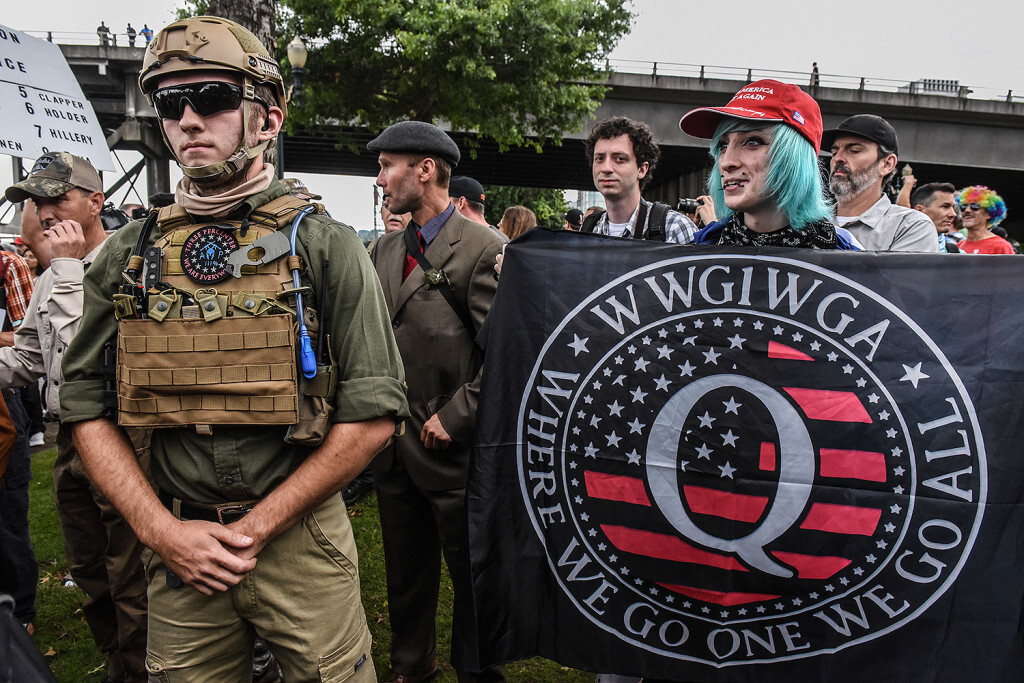
Not all conspiracy theorists are created equally though. For example, should the aging JFK assassination theorist Robert Groden really have been arrested 82 times by the Dallas Police Department for distributing conspiracy DVDs and literature in Dealey Plaza? Maybe not. That being said, incidents like the Comet Ping Pong arson and crimes with QAnon connections like the aforementioned child kidnapping or the murder of a Gambino Crime Family mob boss seem to be another matter entirely and not to be taken lightly.
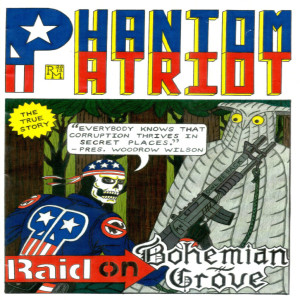
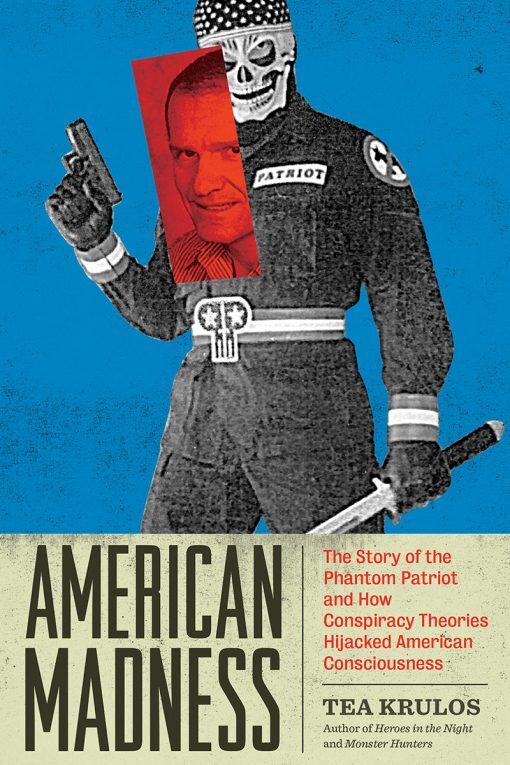
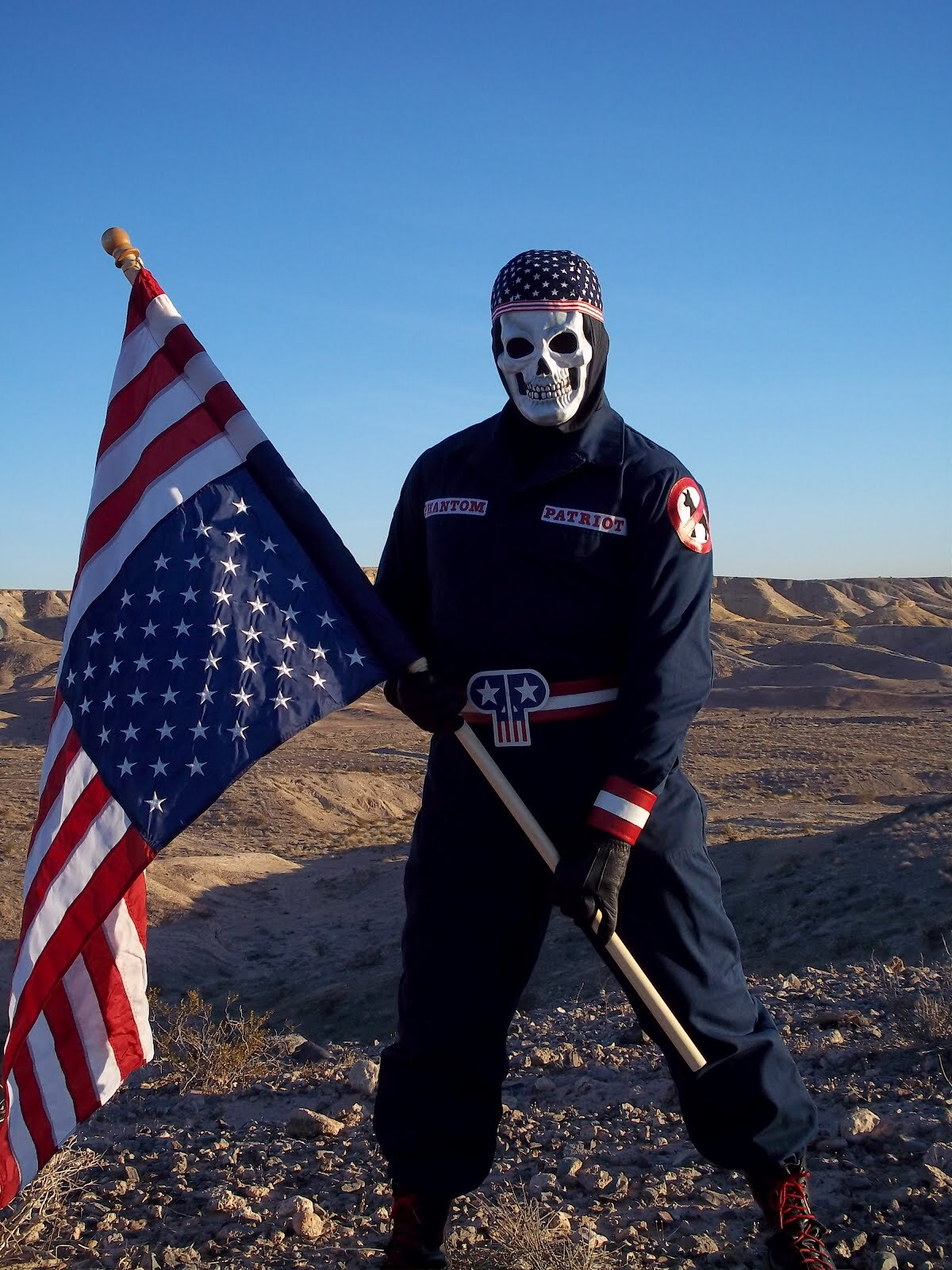
Prior to all these incidents, however, there was a rather strange case in the California's usually quiet Sonoma County that generally flew under the radar. On January 19th, 2002 a man dressed in superhero costume and wearing a skull mask attempted a raid on the Bohemian Grove under the belief that it was a location used by global Satanic elites to sacrifice children to the Babylonian owl god Moloch. After a stand-off in which the masked man pointed a rifle at confused and scared police officers, the vigilante raider was apprehended.
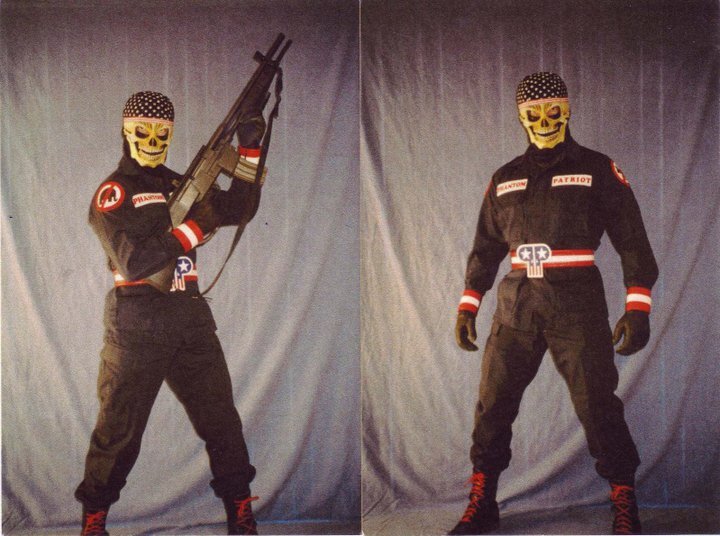
That masked man's name was Richard McCaslin, a cosplayer and Batman stuntman at a Six Flags amusement. Cosplayer, however, may be a bit of an understatement. Richard was a member of what is known as the Real Life Superhero community. RLSH's usually engage in acts of community service like, say, neighborhood watch. Richard, on the other hand, engaged in vigilantism. After watching the Alex Jones documentary Dark Secrets: Inside Bohemian Grove, McCaslin donned his superhero attire and traveled to Sonoma County, California as his alter ego The Phantom Patriot in an attempt to stop what he believed was the nefarious activities Alex Jones alleged were occurring at Bohemian Grove.
Granted, Bohemian Grove does raise an eyebrow or two upon initial examination. This is because the Grove is a vacation retreat for members of the highly exclusive Bohemian Club, whose motto is the slightly spooky "Weaving Spiders Come Not Here". Originally the Bohemian Club's membership was mainly artists. In fact, early members included the likes of Jack London and Mark Twain. What raises an eyebrow for more conspiratorially-minded though is the fact that the Bohemian Club's membership has since then gone on to include such global power players as former Secretary of State Henry Kissinger and former U.S. Presidents like Ronald Reagan and George W. Bush. In this way the Grove acts as a vacation getaway for elites to let loose once a year. On it's own that wouldn't seem to insidious. But then there's the rather odd ritual known as the "Cremation of Care" where the world's most powerful men dress in robes and sacrifice their "Dull Care" to a giant owl statue surrounded by fire in dead of night.
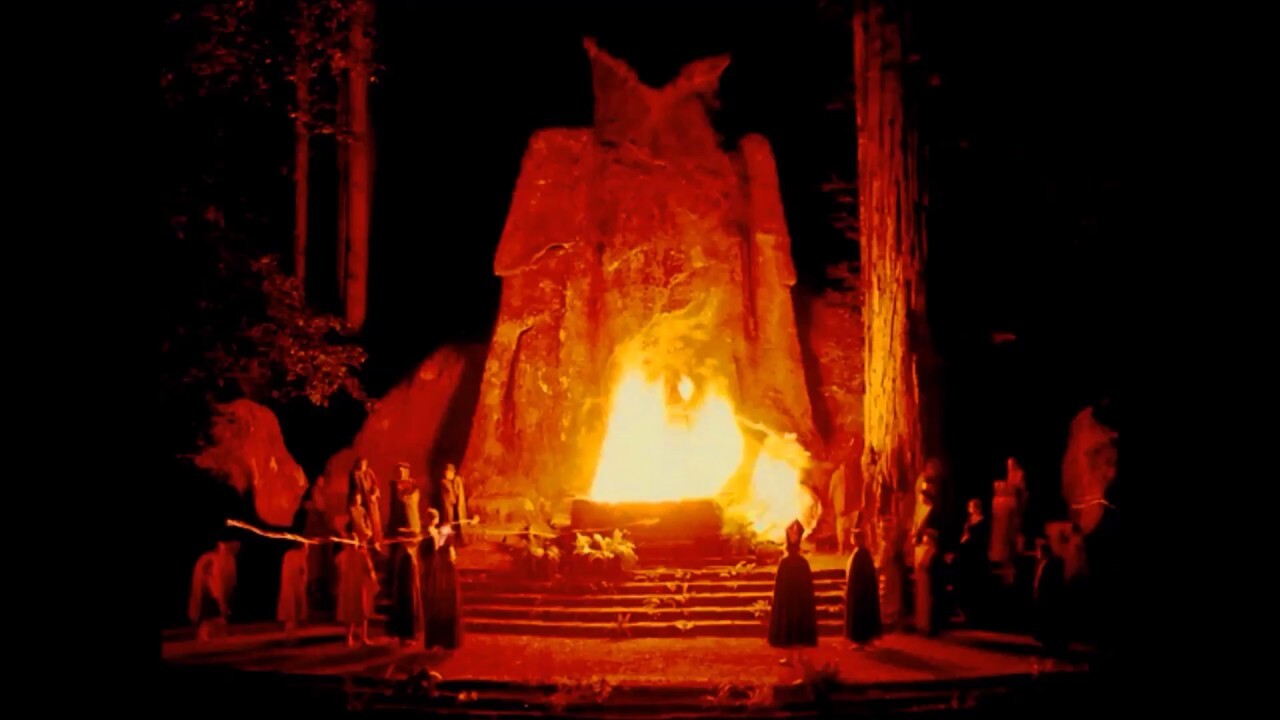
Granted such strangeness could be chalked up to the goofy hijinks of the world's most powerful men letting their juvenile freak loose like they're at Burning Man. That's not what Richard McCaslin, The Phantom Patriot, believed though. For McCaslin the Grove was a location where Satan-worshipping elites committed ritual sacrifices of innocent children beneath a pagan moon... and it was the duty of the Phantom Patriot to thwart their sinister efforts.
Now, the story of Richard McCaslin, alias the Phantom Patriot, may, upon initial inspection, seem to be nothing more than the story of a foolish crank. But upon closer examination can something more be gleaned from his story? What, for example, leads someone like McCaslin to become a conspiracy theory-prone vigilante? And is there a grain of truth to criticism of Bohemian Grove that is revealed through his story? After all, does a citizen like McCaslin, when put on trial, get the same treatment as a uber-wealthy man like Robert Durst, the subject of the HBO series The Jinx that may have gotten away with multiple murders for years? Does the Bohemian Grove, beyond all the tabloid sensationalism of Alex Jones documentaries and books like self-described "mind controlled sex slave survivor" Cathy O'Brien's Trance-Formation of America, offer networking opportunities that are not afforded to the average citizen? Why do misguided true believers like Richard McCaslin, who exhibited creative in various creative pursuits over his lifetime, seem to never reach their full potential while conspiracy hustlers like Alex Jones (who denounced McCaslin after the raid and offered him no support) make millions of dollars off fake supplements and receive international media attention?
Tea Krulos, author of American Madness: the Story of the Phantom Patriot and How Conspiracy Theories Hijacked American, joins us on this edition of Parallax Views to answer those questions and more as we delve into the wild true story of Richard McCaslin aka The Phantom Patriot. Oh, and he also reveals, at the end of the program, a real conspiracy perpetrated by the Bohemian Grove against the Phantom Patriot! All that and more on this edition of Parallax Views.
P.S. - Yes, McCaslin is the subject of the Les Claypool song "The Phantom Patriot".
This Episode Brought to You By:
The War State:
The Cold War Origins of the Military-Industrial Complex and the Power Elite, 1945-1963
by
Michael Swanson
of
The Wall Street Window

Sep 5, 2020
Sep 5, 2020
1 hr 46 min
Weekend Double Feature Episode!
First Up,

Investigative journalist Jean Guerrero, who has become known for her work reporting on the border, joins us to shine a much needed light on Donald Trump's Senior Policy Advisor Stephen Miller. In her new book, Hatemonger: Stephen Miller, Donald Trump, and the White Nationalist Agenda, applies her journalistic skills to cracking the enigma of Miller, from his youth in California and his radicalization by right-wing personalities like Rush Limbaugh, Larry Elder, and David Horowitz to his collaborating with the alt right's Richard Spencer while at Duke University and eventually gaining a key position in the Trump White House. In telling the story of Stephen Miller and his anti-immigration agenda, Guerrero also manages to tell the story of the the immigrants who are the greatest target of Miller's ire and fury. And, despite all his raging against elites and claiming the mantle of anti-elitism, Guerrero shows that Miller is the dark mirror image of the coastal liberals who he accuses of hypocrisy.
Moreover, in the final analysis, Guerrero shows that Miller is not an anomaly but rather a product of politics and cultural paranoia that have existed within the U.S. for decades. In this way, Hatemonger is not just about Stephen Miller and the immigrants he despise, but also the bi-partisan efforts, from the Presidencies of Reagan to Obama, that define the backdrop of their stories.
Some topics covered:
- The unusual coincidence of Miller being born on the same day a U.S. spy plane in El Salvador; Jean explains how U.S. interference in El Salvador and Central America, supporting right-wing death squads, created much suffering.
- Jean Gurrero's experience at Steve Bannon's border symposium and thoughts on Bannon's arrest; Bannon drove her back to her hotel and spoke to her for a bit; Bannon told her that Miller was his "little evil robot"
- How can Stephen Miller, a Jewish man, hold white nationalist views?; Jean has a personal way of answering this question
- Miller's connections to Peter Brimelow of the white nationalist website VDare and eugenics promoters like the anti-immigrant stalwart John Tanton and Jared Taylor's American Renaissance magazine
- The paranoia and conspiracy theories that permeate American culture; Jean's essay "My Father is a Targeted Individual. Maybe We All Are'; what sets the CIA mind control and electronic harassment conspiracy theories espoused by her father and others claiming to be "Targeted Individuals" from the likes of Stephen Miller and promoters of the "White Genocide" conspiracy theory.
- And more
Then

THE GANGSTER PRESIDENCY?
The Newvandal himself, JP Sottile, joins us to discuss how the Trump White House and its associates are looking more and more like something out of a 1940s gangster B-movie. JP argues the Trump White House isn't so much a Presidency as a "big licensing deal". In particular JP hones in on the influencing scandals that have plagued the administration and its associates involving Elliot Broidy, the United Arab Emirates, the Turkish Halkbank, and others. JP says the buck doesn't stop at Steve Bannon and the "We Build the Wall" campaign, when it comes to scandals either directly involving the administration or, in the case of Bannongate, centering on former Trump White House officials.
Are some of the characters in this real-life gangster movie worried about losing control of the Justice Department if Trump loses the election? JP weighs the possibilities.
Additionally, JP and I have a nuanced discussion about Russiagate and money laundering at the beginning of our conversation.
UPDATED
Episode Time Stamps
Time Stamps: Preview Segment - 00:34
Intro Segment - 02:17
Jean Guerrero Interview - 05:16
Transition Segment - 45:22
JP Sottile Interview - 48:48
Outro + Who Let the Dogs Out (Roger Stone House Remix) - 01:42:40
This Episode Brought to You By:
The War State:
The Cold War Origins of the Military-Industrial Complex and the Power Elite, 1945-1963
by
Michael Swanson
of
The Wall Street Window
Sep 4, 2020
Sep 4, 2020
1 hr 6 min

On this edition of Parallax Views, former Trump chief strategist Steve Bannon was recently charged with fraud, specifically conspiracy to commit money laundering alongside Andrew Badolato in relation to a private fundraiser to build a border wall. The Bannon and the other organizers of the "We Build the Wall" campaign are accused of ripping off their donors. The controversial Bannon is set to go on trial in May 2021.

Enter Daniel Hopsicker of Mad Cow Morning News. As a journalist Hopsicker has been exploring dark, murky territory ever since investigating the commercial airline pilot, DEA (and many speculate CIA-connected) informant, and Medellin Cartel drug trafficker Barry Seal. Ever since then Hopsicker has been on the beat of transnational organized crime, specifically as it relates to drug trafficking and money laundering. According to Hopsicker, transnational organized crime's grip on power and politics effectively means we're living on a "Gangster Planet". Although his thesis may be controversial, some would say conspiratorial, Hopsicker often manages to hit a mark better than most other covering the murky depths where drugs, white-collar crime, and corrupt politics intersect with each other. Case in point with the Bannon-Badolato Bust. Through Mad Cow Morning News, Hopsicker has been tracking Badolato for the past 3 years. And he believes that Badolato is much more than the entrepreneurial "businessman" portrayed in recent news articles. Given recent events, I asked Daniel to return to the show to discuss his recent article "Bannon-Badolato Bust Exposes The Abyss" and further elaborate on his "Gangster Planet" thesis. Although he was admittedly a bit burned out from work on his new book when we conducted the interview, I think we had an interesting conversation that we'll have to follow up on in the future.
This Episode Brought to You By:
The War State:
The Cold War Origins of the Military-Industrial Complex and the Power Elite, 1945-1963
by
Michael Swanson
of
The Wall Street Window
Sep 2, 2020
Sep 2, 2020
1 hr 6 min

On this edition of Parallax Views, Richard A. Falk is a professor emeritus of International Law at Princeton University and served from 2008-2014 as the UN Special Rapporteur on the Situation of Human Rights in the Palestinian Territories Occupied since 1967. Prof. Falk has dedicated a lifetime to the cause of human rights and was one of the key conceptualizers of a World Order that, in promoting peace and cooperation over war and politics, sought to counteract the realist school of foreign policy expressed former U.S. Secretary of State Henry Kissinger as well as former U.S. President George H.W. Bush's idea of a "New World Order" in the post-Cold War era that would be exemplified by American primacy and U.S. full spectrum dominance over the rest of the world. At 89 year old, Prof. Falk continues to tirelessly speak to matters of global import seeking justice, peace, cooperation, and the pursuit of human right for citizens around the world.
After reading his recent Counterpunch op-ed "Trumpism, Where Does It Go From Here?", I reached out to Prof. Falk in the hopes that he could share his knowledge of expertise with Parallax Views listeners. He agreed to an interview and spoke with me for an hour on a number of topics including:
- How did we get to this moment that has seen the rise of authoritarianism and autocratic demagogues in the U.S. vis-à-vis Trumpism and around the globe as exemplified figures like Rodrigo Duterte in the Phillipines, Viktor Orbán in Hungary, and Jair Bolsonaro in Brazil?
- Discontent with elites and the inequities created by neoliberal globalization; the pluralism of elites and the divide over Donald Trump's Presidency amongst the elite elements of society; the rural vs. urban divide; the problem with and peculiarities of the Electoral College system in the United States; solution to the issues with face us in regard to U.S. elections due to the way the American electoral system is set up
- The meaning of the concept of the "World Order" and how it differs from the right-wing, paranoid vision of a conspiratorial "New World Order" led by a globalist cabal. How Dr. Falk's belief in "World Order" differs from the both George H.W. Bush's concept of the "New World Order" in the aftermath of the Soviet Union's collapse and the feverish apocalyptic nightmares of the John Bircher Society-esque paranoid-style that pervades the American right today
- The potential for the Digital Age to flatten the countryside vs. city distinction and the new inequities that could arise from the Digital Age; society is changing but not at the pace of the rising global changes facing the world like rapidly increasing economic inequality and climate change
- The New Cold War with China and Washington, D.C.'s hawkish bi-partisan consensus on it; China as a different kind of adversary to the U.S. than the Soviet Union; Graham Ellison's Thucydides's Trap and applying it to understanding present U.S.-China relations
- Are we living in a multipolar world of multiple superpower as opposed to the unipolar world of American hegemonic dominance as envisioned by many after the end of the Cold War?; U.S.'s "hard power" through military spending and might vs. China's "soft power" approach in the current geopolitical confrontation
- Assessing the Obama Presidency in regards to geopolitics and foreign policy; the early Obama Presidency's hopes of manuevering past the Washington D.C. foreign policy "Blob" and why he gave way to the bi-partisan consensus on American foreign policy
- the risk factors of a Biden Presidency and a Trump Presidency; what Biden's foreign and American security policy would likely look like; Biden's domestic policy and how it will likely be referential to the "Wall Street or Goldman Sachs View of the World"; the "Third Way" neoliberalism of Clinton Democrats and what effect movements like Black Lives Matter (BLM), arising in response to the police killing of George Floyd, will have on a Biden White House and that wing of the Democratic Party
- The deep distrust that exists between both primary wings of the Democratic Party; much has been made of the progressive wing's distrust of Biden-style Clinton Democrat moderates/centrists, but the same hold true on the opposite end: moderate Democrats, specifically those with of material interests that would be impacted by addressing structural inequalities, like socially liberal policies but fear that the Bernie Sanders and Alexandria Ocasio Cortez wing of the party are too radical; the variation that exists even within the moderate wing of the party on economic inequality issues and the "trick" that prevents Democrats from progressing in regards to social justice and economic inequity issues facing the U.S. today
- The risks of a second-term Trump Presidency in the White House; the cluster of primary and secondary concerns the U.S. would face in lieu of Trumps' potential second term in office; Saudi-Israel hegemony in the Middle East under Trump and its implications
- Demystifying the situation of Iran and its relationship to the U.S. since 9/11 and Bush's War on Terror Prof. Falk gives a rundown of recent Iranian history and understanding the history of that region within a post-colonial lens since the Iranian revolution; the thought of Ayatollah Khomeini; Obama's normalization-seeking approach to U.S.-Iran relations vs. Trump's aggressive approach to U.S.-Iran relations
- The Israel/Palestine conflict; Prof. Falk's thoughts on the project as a former UN Special Rapporteur on the Situation of Human Rights in the Palestinian Territories Occupied since 1967; shifting popular opinion on the Israel/Palestine conflict; Prof. Falk's hope and optimism for Palestine going forward and his belief that the conflict will be solved via popular resistance and global solidarity rather than UN actions
- Prof. Falk provides possible reasons for hope going into the 2020 election; realizing the dangers of militarism and how recognizing it can allow for more effective forms of cooperative governance globally in the future
This Episode Brought to You By:
The War State:
The Cold War Origins of the Military-Industrial Complex and the Power Elite, 1945-1963
by
Michael Swanson
of
The Wall Street Window
More About Parallax Views:
Over 1 million unique downloads!
Over 950+ episodes!
Ranked in the Top 100 Podcasts Covering "Armed Conflicts" by MillionPodcasts!
As featured in The Daily Dot:
Featured in the academic study of podcasts and podcast culture, The Podcaster's Dilemma:
Decolonizing Podcasters in the Era of Surveillance Capitalism
by Nicholas Brahmin II & Nolan Higdon